Abyssal Lapidary corrupt materials: What We Know
Learn what Abyssal Lapidary reveals about corrupt materials, unusual rawstones, extraction risks, and the mechanics still awaiting confirmation.
Corrupt Materials: Valuable Finds or Dangerous Distractions?
A stone with pulsing red veins is a good reason to pause before swinging your hammer. Abyssal Lapidary corrupt materials matter because the game presents unnatural rawstones as extraordinary finds tied to its underground horror mystery, not simply another batch of ordinary minerals. This guide to Abyssal Lapidary corrupt materials separates official descriptions from player experience so you can recognize the known signs, approach extraction carefully, and avoid treating speculation as a crafting recipe.
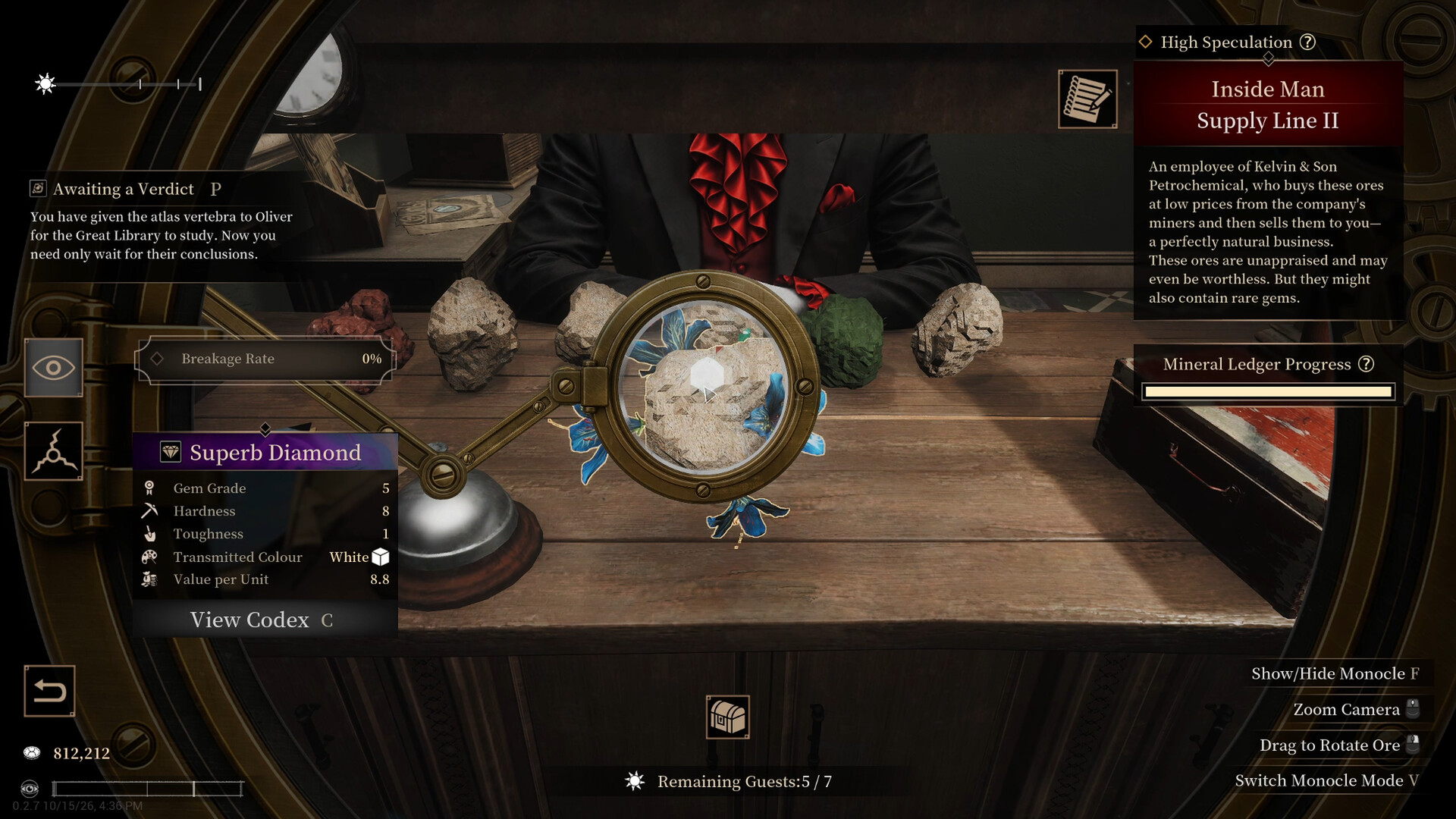
Official screenshot · Source: Steam store
The important limitation: the available official description does not establish “corrupt materials” as a formal item category. Here, the phrase refers to the unusual rawstones described on the game’s Steam page.
As of October 24, 2026, the clearest information comes from that official demo listing and one community discussion about difficult stone-and-gem combinations. Neither provides a complete corruption system, purification method, or material database.
| Question | What the available evidence supports |
|---|---|
| Do supernatural rawstones exist? | Yes; the official description identifies unnatural mineral phenomena. |
| What do they look like? | Examples include pulsing crimson veins and flowers releasing pollen from stone. |
| Do they have special value? | The official description emphasizes exceptional worth without giving prices. |
| Is there a documented corruption meter? | Not in the available sources. |
| Can players cleanse them? | No cleansing method is established by these sources. |
How to Recognize Unusual Rawstones
The strongest clues for identifying Abyssal Lapidary corrupt materials are visual. The official Abyssal Lapidary demo page on Steam describes two striking examples: crimson veins that pulse slowly and strange flowers growing from mineral surfaces while releasing pollen.
Those descriptions establish that some rawstones behave unlike ordinary geological material. They do not establish named rarity tiers, a standardized corruption rating, or specific effects caused by touching the stone.
Known signs versus unconfirmed interpretations
| Visible feature | Officially described? | What you can reasonably conclude |
|---|---|---|
| Slowly pulsing crimson veins | Yes | The stone matches one described supernatural phenomenon. |
| Flowers releasing pollen from mineral surfaces | Yes | The specimen matches another described unnatural phenomenon. |
| A numerical corruption percentage | Not in the available sources | Do not assume one exists. |
| A universal color for all corrupt materials | Not established | Red veins are an example, not a complete identification rule. |
| Guaranteed penalties from handling a specimen | Not established | The narrative suggests danger but supplies no handling formula. |
A practical approach is to inspect unusual specimens before committing to extraction. Note whether you are seeing something that matches an official description or simply a difficult-looking mineral formation.
That distinction matters. An ordinary gem embedded in stubborn rock can be hard to recover without having any supernatural property. Likewise, a strange-looking rawstone should not automatically be assigned invented effects such as durability damage, passive income bonuses, or sanity loss.
Treat appearance as an identification clue, not a complete mechanics sheet. If your build displays additional item information, use that information rather than inferring precise effects from the artwork alone.
For personal reference, record the specimen’s appearance, any displayed name, and what happens when you work on it. Keeping those observations separate helps you distinguish repeatable behavior from a one-off result.
Working on Abyssal Lapidary Corrupt Materials
There is no verified extraction procedure specifically for Abyssal Lapidary corrupt materials in the available references. What is established is the broader workshop process: choose tools according to a stone’s shape and type, remove waste rock, and preserve the valuable mineral inside.
The official description also states that cutting precision and the original mineral’s natural traits influence the finished gem’s value. That makes careful work relevant even before any supernatural properties enter the picture.
When hammering keeps damaging the gem
In a Steam community discussion about difficult stone-and-gem combinations, one player described trouble extracting gems from surrounding rock that seemed equally hard or harder.
A responding player recommended trying the hacksaw for small, soft gems. Their account stressed that positioning the cut can be difficult and that some material loss may be unavoidable.
This is player experience, not an official tool specification or a confirmed method for supernatural specimens. Still, it provides a useful alternative when repeated hammer strikes are producing damage instead of a clean extraction.
| Situation | Practical response | Evidence status |
|---|---|---|
| Hammering repeatedly damages the embedded gem | Stop and reconsider the tool or approach | Cautious advice based on the reported problem |
| A small, soft gem is difficult to extract | Consider trying the hacksaw | Player experience |
| A hacksaw cut is awkward to position | Reassess the angle before continuing | Player experience reports difficult positioning |
| You have visibly split a stone | Put it away, then retrieve only the half you want to work on | Community-reported workaround |
| You notice supernatural features | Inspect before assuming ordinary or special behavior | Precaution, not a verified corruption mechanic |
The split-stone warning
The same community reply reported that hammer impacts could still affect the opposite side of a stone after it appeared visibly split. The suggested workaround was to put the split stone away and then bring out only the desired half.
That report concerns general extraction, not corrupt materials specifically. It is also a single account and may not describe every game version.
Nevertheless, it offers a concrete troubleshooting step: if a separated piece appears to take unexpected damage, try isolating the half you intend to work on before striking again.
A cautious workflow
For valuable or unfamiliar rawstones, use this decision process:
- Inspect the specimen. Identify visible mineral boundaries and unusual features where possible.
- Choose an initial approach. Base it on shape and stone type rather than habit.
- Watch the result. If the gem is taking damage, pause rather than repeating the same action.
- Consider another tool. The hacksaw is a community-reported option for some difficult soft-gem extractions.
- Reassess after splitting. If behavior seems inconsistent, try the community’s storage-and-retrieval workaround.
This is a conservative general workflow, not a guaranteed lossless method. The available evidence does not support promising perfect recovery.
Value, Jewelry, and the Cost of Workshop Time
The appeal of Abyssal Lapidary corrupt materials is clear: the official description presents supernatural rawstones as exceptionally valuable. However, that language is not a published price table.
There are no verified sale values, corruption multipliers, or comparisons showing how much more these specimens earn than ordinary gems.
What the official description does establish is a workshop economy with limited daily time. You appraise rawstones, reveal minerals, cut gems, and combine faceted stones with metal fittings to make jewelry. Both money and reputation are part of the broader workshop loop.
| Value factor | Confirmed information | Practical takeaway |
|---|---|---|
| Original mineral traits | Affect the finished gem’s value | The starting specimen matters. |
| Cutting precision | Affects the finished gem’s value | Careful finishing has a documented purpose. |
| Supernatural properties | Described as exceptionally valuable | Worth investigating, but no exact premium is known. |
| Jewelry production | Uses faceted gems and metal fittings | A confirmed general crafting route, not a verified recipe for every unusual specimen. |
| Daily time | Workshop time is limited | Difficult extractions have an opportunity cost. |
Should you keep working on a difficult specimen?
Separate its potential value from the time and damage involved in recovering it.
For example, suppose a small gem keeps breaking while you remove its surrounding rock. Continuing the same hammering approach may consume time without improving the outcome. Trying a different tool has a clearer basis in the available player experience than assuming the specimen needs a hidden purification step.
For an unusual rawstone, a useful question is: What can I verify before investing more work?
Look for displayed item details, observable tool responses, and clear changes in the specimen. Those checks are more reliable than guessing that every supernatural visual effect guarantees a profitable finished piece.
The sources do not confirm whether unusual specimens should always be sold, retained, or used in jewelry. Avoid treating any one of those choices as universally optimal.
What Remains Unknown About Corruption
The biggest risk when researching Abyssal Lapidary corrupt materials is confusing atmospheric storytelling with fully documented mechanics.
The official description connects strange appraisals with an ancient observing presence. It also mentions a mysterious monolith, a heartbeat-like room, and a bottomless pit within Vermilion House. These details support the game’s horror premise, but they do not explain an actionable corruption system.
In particular, the available material does not establish:
- A corruption meter, threshold, or accumulation rate.
- Specific penalties triggered by appraising a certain number of stones.
- A cleansing station or purification consumable.
- A complete list of supernatural minerals.
- Special extraction tools required for unusual rawstones.
- A confirmed relationship between a particular specimen and the monolith.
These are unanswered questions, not proof that the features cannot exist.
When comparing advice, keep the evidence level visible. An official description can establish a feature’s broad existence; a player report can suggest a troubleshooting technique. Neither automatically supplies a complete formula.
The Steam listing includes an October 23 demo update announcement, while the extraction discussion is dated October 21. Without the full patch details, there is no basis for claiming that the reported split-stone behavior was fixed—or remains unchanged—in that update.
For now, the most dependable approach to Abyssal Lapidary corrupt materials is straightforward: recognize the documented visual signs, protect the mineral during extraction, and treat precise corruption claims as unverified unless the game or a reliable source demonstrates them.
FAQ
What are Abyssal Lapidary corrupt materials?
The phrase refers here to the game’s supernatural-looking rawstones, including specimens with pulsing crimson veins or pollen-releasing flowers. The available official description confirms those phenomena but does not establish “corrupt materials” as a formal inventory category.
Can you purify or cleanse corrupt materials?
No purification or cleansing method is documented in the available references. There is no verified recipe, workstation, or consumable to recommend. A stone’s unusual appearance alone does not establish that cleansing is required.
What tool should you use when extracting a soft gem?
Player experience suggests trying the hacksaw when hammering damages a small, soft gem inside difficult surrounding rock. The same report warns that the cutting angle can be awkward and some loss may occur. This is general extraction advice, not a confirmed corrupt-material technique.
Are supernatural rawstones worth more than ordinary gems?
The official description presents them as extraordinarily valuable, but it provides no prices or numerical multiplier. Cutting precision and the original mineral’s traits affect gem value generally; exact returns for supernatural specimens remain unconfirmed.
Related Guides
Abyssal Lapidary activation anomaly: Demo Guide
Understand Abyssal Lapidary's anomaly warnings, unusual finds, and activation lore, with practical demo tips and clearly labeled player experience.
Abyssal Lapidary AI Usage: What Players Should Know
Explore Abyssal Lapidary AI usage claims about textures, English localization, and coding, plus what remains unverified and how to check.
Abyssal Lapidary awareness: Effects and Recovery
Learn how Abyssal Lapidary awareness rises, what hallucinations and mental overload mean, and how to manage abnormal minerals and recovery.
Abyssal Lapidary gem cutting: Beginner Guide
Explore Abyssal Lapidary gem cutting, from ore appraisal to jewelry crafting, with confirmed mechanics and practical tips for the demo.
Abyssal Lapidary demo: Release, Gameplay, and PC Specs
Try the free Abyssal Lapidary demo on Steam. Explore its release details, gem-cutting gameplay, beginner tips, PC requirements, and horror setting.