Abyssal Lapidary cthulhu: Cosmic Horror Explained
Explore Abyssal Lapidary's Cthulhu connection, living gemstones, gothic mysteries, and crafting gameplay, plus what the Steam demo confirms.
Is Abyssal Lapidary Actually About Cthulhu?
A gemstone that seems to breathe turns a jeweler’s workshop into a place of dread. The Abyssal Lapidary cthulhu connection matters because it helps distinguish this gothic crafting simulation from a straightforward shop-management game. If you’re searching for Abyssal Lapidary cthulhu, the key distinction is simple: its Lovecraftian themes are evident, but the available official description does not confirm Cthulhu himself.
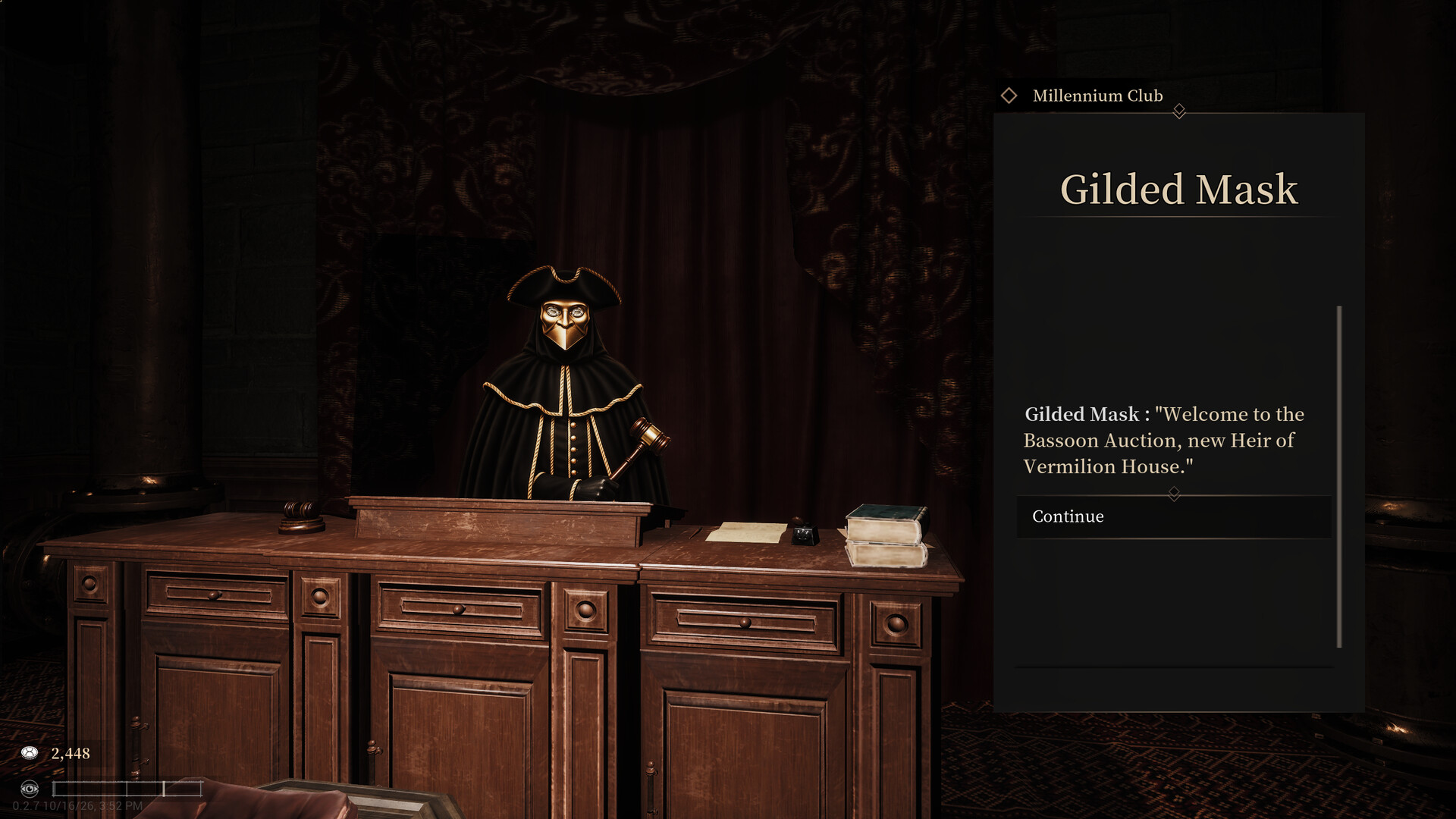
Official screenshot · Source: Steam store
Developed by Light Worm and published by XD, Abyssal Lapidary places you in a Victorian-inspired underground city. You inherit a struggling establishment, work with unsettling minerals, and investigate secrets that extend beyond the jewelry counter.
This overview draws on the official Steam listing, not a hands-on playthrough. As of October 24, 2026, that listing offers a free demo while describing the full game’s release as “Coming soon.”
Lovecraftian influence is not the same as Mythos canon
“Lovecraftian” often describes horror built around forbidden knowledge, unstable perception, and forces beyond ordinary understanding. A game can use those ideas without featuring named entities from the Cthulhu Mythos.
That distinction is essential here:
| Question | What the available listing supports |
|---|---|
| Does the game suggest cosmic horror? | Yes: abyssal threats, disturbing minerals, whispers, and hallucinations feature in its description. |
| Is “Lovecraftian” associated with the game? | Yes, it appears among Steam’s user-defined tags. |
| Is Cthulhu named in the official description? | No. |
| Are specific Mythos gods or cults confirmed? | Not in the supplied official material. |
| Is it primarily a combat game? | The description emphasizes crafting, management, and mystery rather than combat. |
Treat the Abyssal Lapidary cthulhu connection as a thematic comparison, not confirmation of a particular monster, mythology, or boss encounter.
How Gem Cutting Becomes Cosmic Horror
The game’s strongest premise is that its ordinary work and supernatural danger involve the same objects. You are not simply managing a business while something frightening happens elsewhere. The material beneath your tools is itself unsettling.
A lapidary cuts and polishes stone. Here, that precise craft puts you in close contact with minerals that appear to violate the boundary between living tissue and inert matter.
Familiar work, unfamiliar materials
The official description establishes several concrete tasks: examining rough minerals, removing impurities, cutting facets, and turning finished gems into jewelry.
Each task provides a different opportunity for unease.
| Crafting activity | Practical purpose | Potential thematic effect |
|---|---|---|
| Examining raw minerals | Understand the material before working it | Close inspection may expose disturbing details |
| Removing impurities | Prepare a stone for further shaping | Separating useful material from unwanted matter becomes unsettling |
| Cutting facets | Shape the gemstone | Precision work brings you into prolonged contact with strange ore |
| Setting polished gems | Create finished jewelry | Unnatural materials become desirable objects |
| Serving customers | Build the business and its reputation | Professional success brings increasingly unusual clients |
The thematic effects above are interpretations of the premise, not confirmation of separate gameplay systems. The listing does not explain every tool, failure condition, or consequence of an individual cut.
That restraint matters. There is no basis here for inventing cursed-item statistics, corruption meters, or recipes.
Perception becomes part of the threat
The official description connects continued work with sharper perception and intensifying hallucinations. It also describes formations appearing within stone and unexplained sounds in empty spaces.
That combination supports a classic cosmic-horror question: Are you losing your ability to understand reality, or beginning to see what was always there?
This is where the Abyssal Lapidary cthulhu comparison becomes useful. The fear is not limited to a creature’s appearance. It comes from knowledge becoming dangerous and professional expertise exposing something you might have preferred not to notice.
However, hallucinations in a narrative description do not establish a measurable sanity system. Until more details are available, distinguish the psychological theme from an explicit gameplay mechanic.
Fathomholm and Vermilion House: Two Layers of Mystery
Abyssal Lapidary uses both an underground city and an inherited property to frame its horror. These settings serve different purposes: Fathomholm supplies the wider social world, while Vermilion House gives the mystery a personal center.
Fathomholm makes the strange feel ordinary
Fathomholm is a Victorian-inspired subterranean metropolis populated by mysterious customers. Its setting places craftsmanship, commerce, and abyssal unease in the same everyday environment.
The underground location also gives the premise a strong sense of enclosure. In a conventional mining story, disturbing discoveries might arrive from a distant excavation. Here, the broader world is already beneath the surface.
That is thematic interpretation rather than a claim about map size or exploration freedom. The official description does not establish an open world, a navigable city network, or particular districts.
The customers add another layer. According to the listing, a growing reputation attracts increasingly strange clientele. Commercial progress therefore promises more than better business: it also brings you closer to the setting’s unusual inhabitants.
Vermilion House makes the horror personal
You inherit Vermilion House in decline. The official material connects it with concealed passages, closed-off rooms, old records, an organic-seeming chamber, and a crime hidden in its past.
These details combine gothic mystery with cosmic horror:
| Setting element | Gothic function | Cosmic-horror reading |
|---|---|---|
| Inherited establishment | Ties the protagonist to an unresolved past | Suggests an unfamiliar legacy |
| Concealed passages | Creates secrets within familiar architecture | Makes the building harder to understand |
| Old ledgers | Preserves traces of previous activity | Offers possible evidence beyond ordinary business |
| Sealed chambers | Keeps the past physically inaccessible | Encourages curiosity about forbidden spaces |
| A chamber with a heartbeat-like quality | Turns a building into something bodily | Blurs distinctions between architecture and life |
The Abyssal Lapidary cthulhu appeal comes partly from this overlap. Gothic fiction asks what happened in the house. Cosmic horror asks what kind of reality could allow the house to behave this way.
The listing confirms a buried crime, but not its culprit, full circumstances, or resolution. There is also no support in the supplied material for promising branching endings or particular investigation outcomes.
What the Crafting and Management Premise Promises
The description presents a clear sequence of work: assess minerals, refine them, shape gems, and make jewelry for customers. Alongside that process, you develop your establishment’s reputation and uncover its history.
The attraction is the contrast between controlled workmanship and uncertain knowledge. Gem cutting asks you to observe carefully. The horror premise makes careful observation potentially troubling.
Read the management label carefully
The game is described as a gothic management simulation, but that does not automatically confirm every feature associated with shop games.
The supplied listing does not detail employee hiring, automated production, adjustable pricing, or complex financial systems. Likewise, its RPG genre designation does not establish combat classes or a skill tree.
For readers following the Abyssal Lapidary cthulhu angle, the most reliable expectation is crafting-centered horror with business progression and an unfolding mystery. More specific systems should be evaluated through the demo or future official announcements.
Three design questions worth watching
The available premise raises useful questions for prospective players:
- Does each mineral feel distinct? The description says materials behave differently; the important test is whether those differences meaningfully change your approach.
- Does craftsmanship remain satisfying during unsettling scenes? The game’s identity depends on both the work and the dread surrounding it.
- Does reputation deepen the mystery? Stranger clients could connect business progression with the larger story, but the extent remains to be seen.
These are evaluation criteria, not claims that the finished game already succeeds at them.
How to Evaluate the Free Demo
The free demo provides a practical way to assess whether the crafting-and-horror combination suits you. The supplied Steam announcements identify a public demo launch on October 16, 2026, followed by a demo patch announcement on October 23.
As of October 24, the full game still has no specific release date in the supplied listing. For downloads and subsequent changes, use the official Abyssal Lapidary Steam page.
Use a focused first-session checklist
Rather than judging only the atmosphere, examine how well the underlying work holds your attention.
| What to check | Action to take | Why it matters |
|---|---|---|
| Tool clarity | Read prompts before committing to a cut | Helps separate deliberate precision from confusing controls |
| Material differences | Compare any minerals the demo makes available | Tests the promise that stones behave differently |
| Crafting satisfaction | Notice whether shaping and finishing feel rewarding | The work needs to hold up between story events |
| Narrative delivery | Pay attention to records, dialogue, and environmental clues when available | Shows how the mystery enters ordinary play |
| Comfort | Review camera and audio options before a longer session | Unsettling presentation should not prevent comfortable play |
| Performance | Test the available settings on your own hardware | Published requirements cannot guarantee your experience |
The listing advertises saving at any time, color alternatives, camera-comfort options, and custom volume controls. It also states that play does not require quick-time events. Check which features are available in the current demo build rather than assuming complete parity with the final release.
Check the hardware requirements first
The published minimum specifications include:
- Operating system: Windows 10, 64-bit
- Processor: Intel Core i5-8400 or AMD Ryzen 5 2600
- Memory: 8 GB RAM
- Graphics: GTX 1650, GTX 1060 6GB, or Radeon RX 570 with 4 GB VRAM
- DirectX: Version 12
- Storage: 10 GB available space
Steam Deck compatibility is listed as unknown. Avoid interpreting that status as either verified support or confirmed incompatibility.
Ultimately, the Abyssal Lapidary cthulhu premise is most compelling if you enjoy dread emerging through routine activity. The demo is the best available way to determine whether its detailed craftwork and disturbing discoveries create that tension for you.
FAQ
Does Abyssal Lapidary feature Cthulhu himself?
Cthulhu is not named in the supplied official description. The Abyssal Lapidary cthulhu connection refers to its apparent cosmic-horror themes, including unnatural materials, altered perception, and abyssal threats. A literal appearance by Cthulhu remains unconfirmed.
Is Abyssal Lapidary a horror game or a management simulator?
Its official description presents it as a gothic management simulation with jewelry crafting and a supernatural mystery. Horror is part of the premise, but the advertised activities focus on examining minerals, cutting gems, making jewelry, serving strange customers, and investigating Vermilion House.
Can you play Abyssal Lapidary now?
As of October 24, 2026, the supplied Steam listing offers a free demo. The full game is listed as coming soon, without a specific release date. Check the official store page for current availability.
Does the game have a sanity meter or combat system?
Neither a numerical sanity meter nor a combat system is confirmed in the supplied description. Hallucinations and sharpened perception are described, but those narrative elements should not be treated as proof of particular mechanics. The clearest confirmed focus is craftsmanship, reputation, and mystery.
Related Guides
Abyssal Lapidary lovecraftian Themes Explained
Explore Abyssal Lapidary's Lovecraftian themes, living minerals, gothic mysteries, and gem-cutting gameplay, with practical demo tips.
Abyssal Lapidary gem cutting: Beginner Guide
Explore Abyssal Lapidary gem cutting, from ore appraisal to jewelry crafting, with confirmed mechanics and practical tips for the demo.
Abyssal Lapidary activation anomaly: Demo Guide
Understand Abyssal Lapidary's anomaly warnings, unusual finds, and activation lore, with practical demo tips and clearly labeled player experience.
Abyssal Lapidary demo: Release, Gameplay, and PC Specs
Try the free Abyssal Lapidary demo on Steam. Explore its release details, gem-cutting gameplay, beginner tips, PC requirements, and horror setting.
Abyssal Lapidary PC: Demo, Specs, and Release Info
Explore Abyssal Lapidary PC platforms, Steam demo access, system requirements, release status, and beginner tips for its gothic gemstone business.